It was suggested to have a more in depth look at the radar mast at RAF Stenigot. A brief history of the site can be found on this previous report.
To recap, this is one of the few remaining towers of the WWII's Chain Home network, which provided an early warning of Luftflotte invasions into central England and is now used to train RAF aerial erectors.
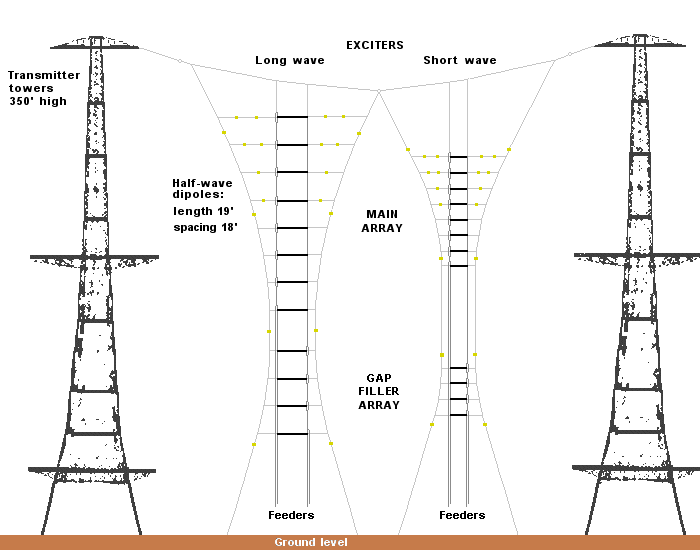
It's one of the transmitter masts and would have been one of four on the site, along with four receivers. This diagram gives some kind of explanation of how they worked:
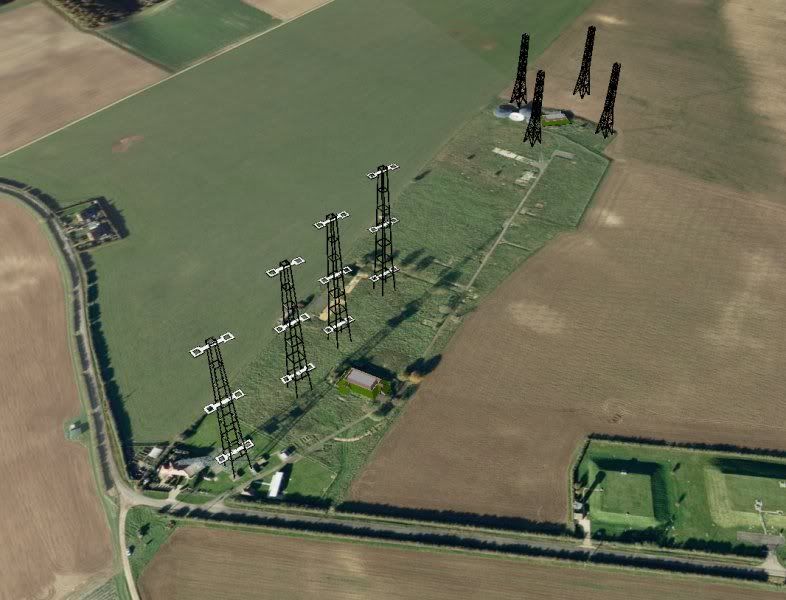
Here's an impression I found of how the site might have looked in its heyday:
Sunday, 8 June 2014
Monday, 26 May 2014
RAF Stenigot
There are several interesting surviving features at this former radar station.
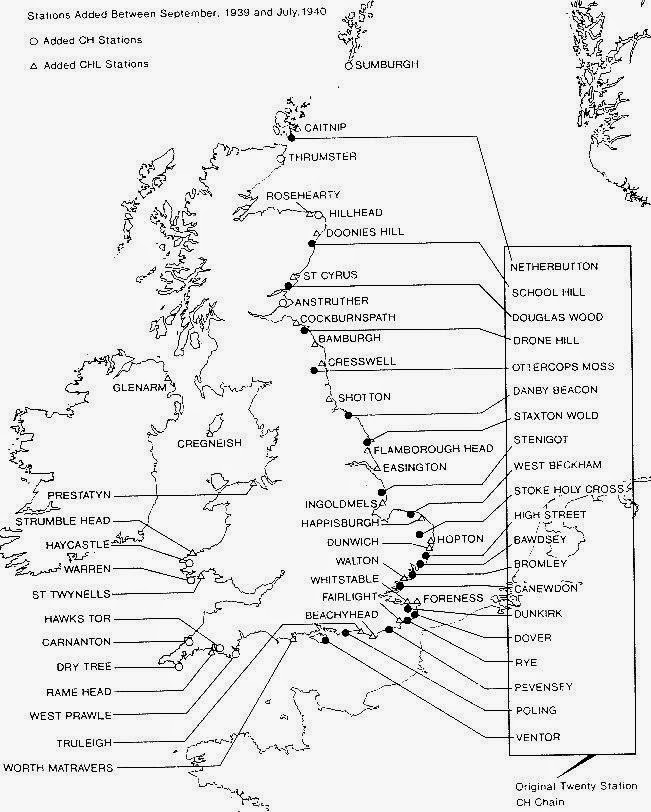
A 360 foot radar transmitter tower, a remnant of WWII's Chain Home network (map below), helped provide an early warning of Luftflotte invasions into central England.
Also, there remain four tropospheric scatter dishes. These were built in 1959 as one of the 82 stations which were part of the NATO's ACE High program, a long range cold war communication system. This is how they looked when in service:
The site was decommissioned in the 80s and mostly demolished in the 90s. The tower is now used by the RAF for its aerial erector school.
Tower
When in service there would have been a third pair of platforms, right at the top.
Tropospheric dishes
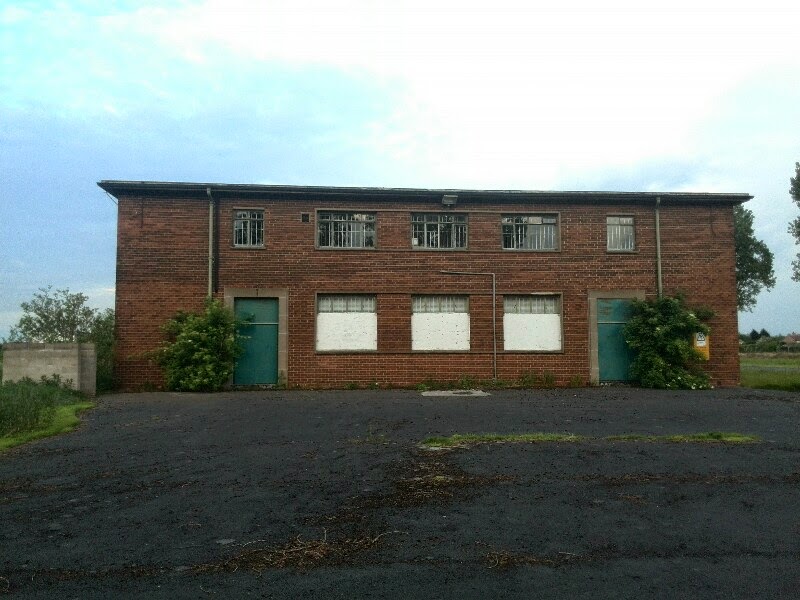
There are also a couple of remaining buildings - this is the outside of the 'transmitter block', and a pill box is nearby.
Thanks for viewing, await next communication!
Tuesday, 20 May 2014
Northern Radar
There's a striking building to the west of the A614 between Hatfield Woodhouse and Blaxton.
This was part of former RAF Lindholme, named Humber Radar, later Northern Radar - a Joint Air Traffic Control Radar Unit (JATCRU). According to the South Yorkshire Historic Environmental Characterisation website,
A late addition to the RAF station at Lindholme is the cold war period Lindholme Tactical Control Centre, one of two surviving complexes of its kind in the UK from an original four (SMR ref: 4582). The buildings, which include the base of a Type 82 Radar Unit and the Tactical Control Centre itself, served as part of the Cold War Bloodhound Missile System, a network of control centres controlling 11 missile sites, mostly protecting the bases for the British V-Force air-launched nuclear deterrent - operational until the introduction of the submarine-launched Polaris system. The Monument Protection Programme considered this site to be of “National Importance” and recommended it be put forward for listing (Cocroft 2001).
Here is a photo from 1968 of the "operations room" - not sure if this means the radar unit or control centre - presumably the latter:
And this is a diagram I found at radarpages.co.uk of how the radar building would have looked fully equipped:
This was part of former RAF Lindholme, named Humber Radar, later Northern Radar - a Joint Air Traffic Control Radar Unit (JATCRU). According to the South Yorkshire Historic Environmental Characterisation website,
A late addition to the RAF station at Lindholme is the cold war period Lindholme Tactical Control Centre, one of two surviving complexes of its kind in the UK from an original four (SMR ref: 4582). The buildings, which include the base of a Type 82 Radar Unit and the Tactical Control Centre itself, served as part of the Cold War Bloodhound Missile System, a network of control centres controlling 11 missile sites, mostly protecting the bases for the British V-Force air-launched nuclear deterrent - operational until the introduction of the submarine-launched Polaris system. The Monument Protection Programme considered this site to be of “National Importance” and recommended it be put forward for listing (Cocroft 2001).
Here is a photo from 1968 of the "operations room" - not sure if this means the radar unit or control centre - presumably the latter:
In 1985 RAF Lindholme was sold and became HMP Lindholme. The prison buildings are to the east of the A614 - this area is on the other side. Wikipedia states:
The last RAF connection, an automatic routing installation, which opened on 25 May 1983 and was run by 840 Signals Unit was closed in March 1996. It occupied the old Northern Radar building ground floor, refurbished to accommodate the Telegraphic Automatic Routing Equipment (TARE) and a manual telegraphic switching centre and was parented by RAF Finningley. The TARE was a dual suite Ferranti Argus 500 computer system, each suite having a 64k word core store and two 2Mbyte hard drives and running software written using Coral 66.
Both buildings seem to be in good structural condition, and are well sealed. The lawn is being mown and a scrapheap has been built - it looks like a bonfire pile on one of the the circular hard-standings.
Over and out - thanks for reading!
The last RAF connection, an automatic routing installation, which opened on 25 May 1983 and was run by 840 Signals Unit was closed in March 1996. It occupied the old Northern Radar building ground floor, refurbished to accommodate the Telegraphic Automatic Routing Equipment (TARE) and a manual telegraphic switching centre and was parented by RAF Finningley. The TARE was a dual suite Ferranti Argus 500 computer system, each suite having a 64k word core store and two 2Mbyte hard drives and running software written using Coral 66.
Both buildings seem to be in good structural condition, and are well sealed. The lawn is being mown and a scrapheap has been built - it looks like a bonfire pile on one of the the circular hard-standings.
The radar building is known as a "Type 82 / Orange Yeoman"
Operational control centre
Over and out - thanks for reading!
Subscribe to:
Posts (Atom)